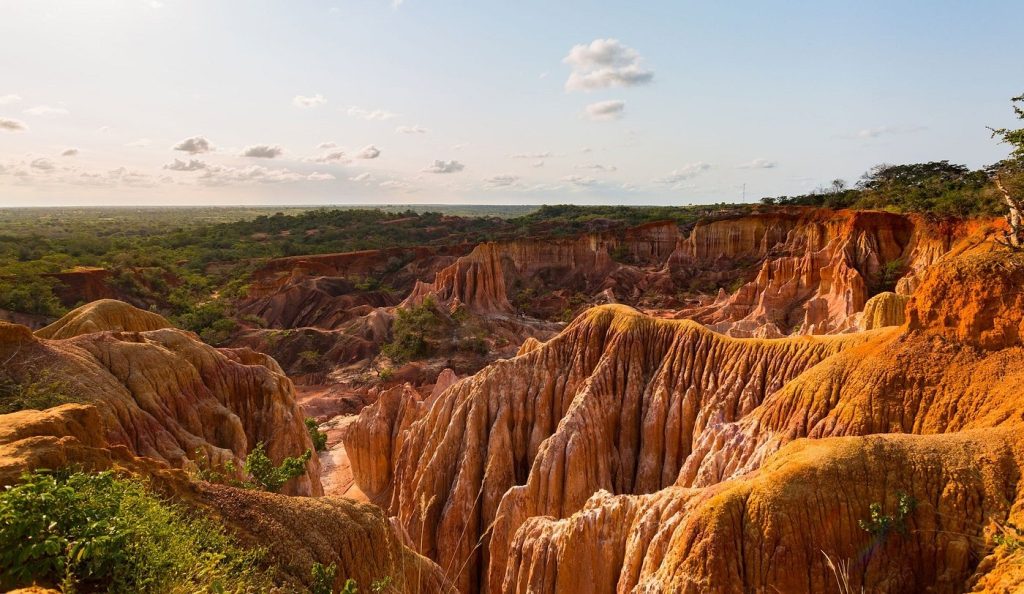
Maasai Mara National Reserve (established 1961) is Kenya’s most iconic wildlife destination, named after the Maasai people. “Mara” means “spotted” in Maa, referring to its acacia-dotted plains.
Key Historical Highlights:
- Indigenous Roots
- Traditionally, the Maasai pastoralists used for grazing cattle.
- The Maasai coexisted with wildlife for centuries, helping shape the region’s ecosystem.
- Colonial Era (Early 20th Century)
- British settlers declared parts of the area as game reserves, displacing some Maasai communities.
- Hunting safaris became popular among European elites.
- Wildlife Conservation (Post-1961)
- Officially gazetted as a National Reserve under Narok County management.
- Created as an extension of Tanzania’s Serengeti, protecting the path of the Great Migration (wildebeest and zebras).
- Modern Significance
- Listed by UNESCO as part of the Serengeti-Mara Ecosystem.
- Globally recognized for Big Five sightings and authentic Maasai cultural tourism.
Did You Know?
- The Mara hosts over 1.5 million wildebeest annually during the Great Migration (July–October).
- The Maasai still graze cattle in conservancies that border the reserve.
“A timeless wilderness where culture and wildlife collide.”
Location: Southwest Kenya, bordering Tanzania’s Serengeti.
Best Visit Time: Migration season (July–October) or the dry months (December–February).
3-day, 2-night Maasai Mara itinerary that maximizes wildlife viewing and cultural experiences while keeping travel logistics smooth:
3-Day Maasai Mara Safari Itinerary
(Perfect for weekends or short getaways)
Pro Tips:
- Pack: Binoculars, neutral-colored clothing, and a power bank.
- Migration bonus: July–October for river crossings; December–February for the calving season.
“Three days of raw wilderness and unforgettable moments!”